Have you ever thought that electromagnetic waves can clone themselves? A polarimetric radar can do what ordinary radars cannot—it reveals a target’s true identity, not just its position and speed.
What Makes an Electromagnetic Wave Polarized?
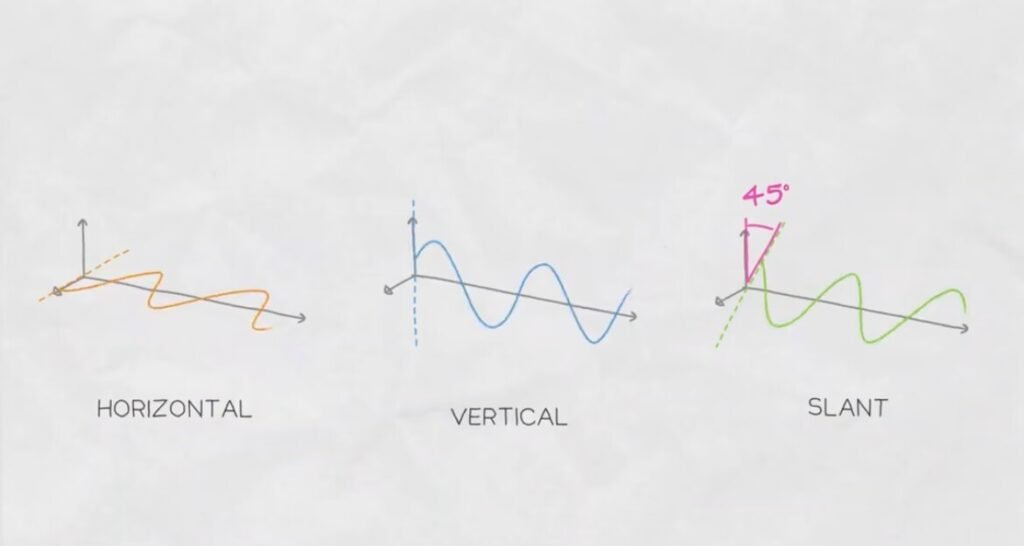
An electromagnetic wave is a transverse wave – the direction in which it oscillates back and forth is perpendicular to the direction of propagation. To describe a transverse wave, there are three important physical quantities: wavelength, amplitude, and direction. The wavelength determines the frequency, and the amplitude determines the power. By varying the wavelength and amplitude, you can construct a rich variety of RF waveforms – pulses, linear frequency modulation, pulse-to-pulse frequency hopping – many tricks.
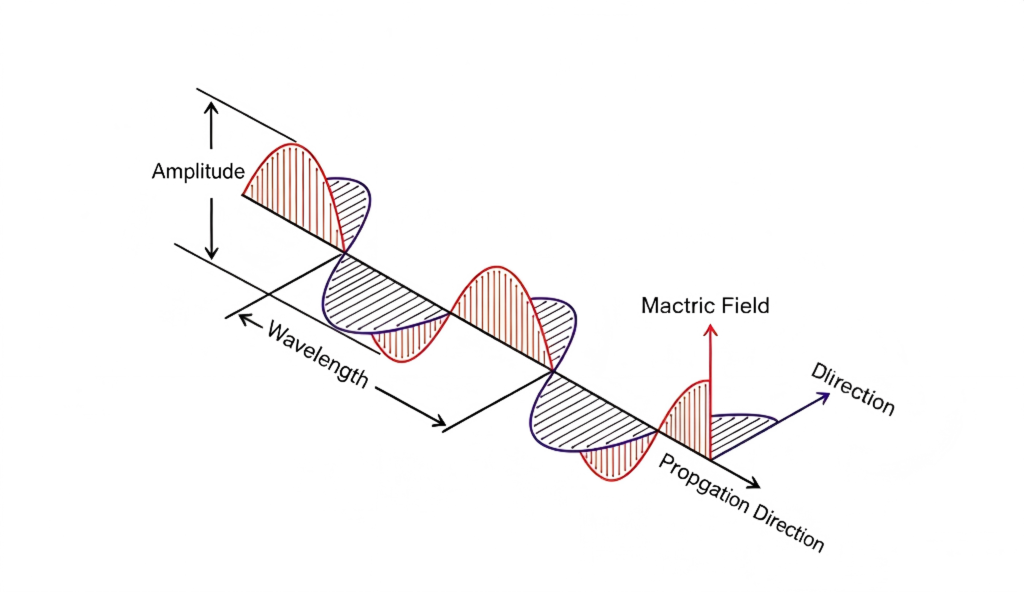
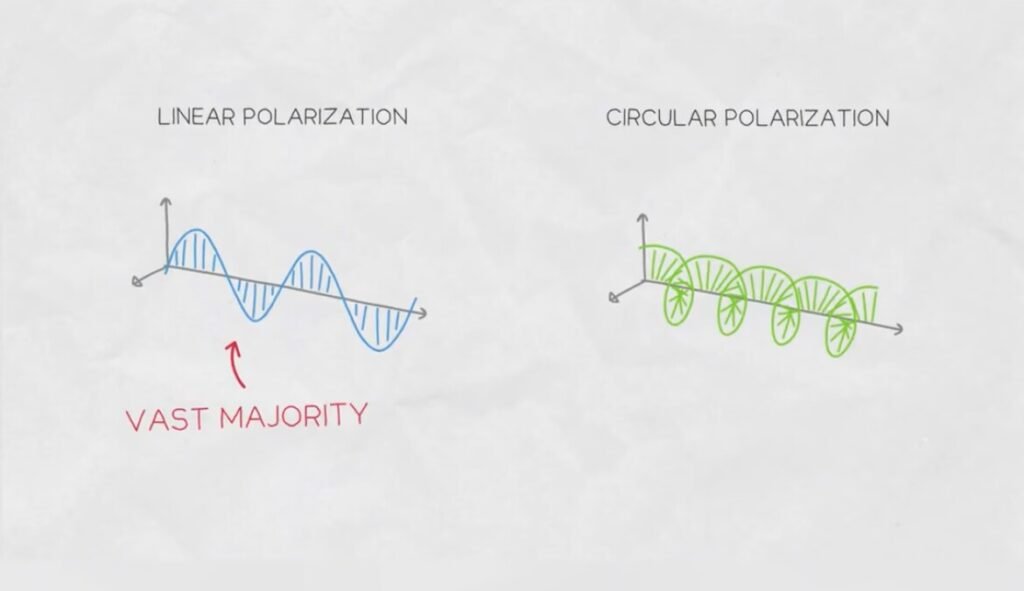
Within the plane perpendicular to its direction of propagation, an electromagnetic wave can have countless vibration directions. What happens if it vibrates only in one specific direction? For visible light, this creates polarization; for electromagnetic waves, it also creates polarization. In English, they are actually the same word: polarization.
How Dual-Polarization Works: The Antenna Feed Design
The polarization of an electromagnetic wave is realized through the feed of the antenna. For example, in this polarized horn antenna, deep inside, there are two feeds – one horizontal and one vertical.
Through the design of the feeds and the antenna structure, the vibration direction of the electric field of the electromagnetic wave can be constrained. The feed line is responsible for converting the electrical signals in the cable into electromagnetic waves in space, and the antenna is responsible for radiating those electromagnetic waves outward. This feed line can produce two mutually orthogonal electromagnetic waves, horizontal and vertical, respectively. In high-performance systems, low-loss coaxial cable assemblies and precision waveguide components are essential to maintain polarization purity.
This is the simplest kind of polarimetric antenna – a polarimetric radar.
Dual-Polarization Detection: Two Perspectives at Once
In the antenna of this radar, we have designed two transmission channels with a total of ten feeds, half of which are horizontal feeds and the other half vertical feeds. This is not a simple stacking of numbers; it allows the radar to scan the world at every moment with two orthogonal perspectives simultaneously – this is dual-polarization detection. It is like a radar having two clones that can transmit and receive two sets of waveforms at the same time.
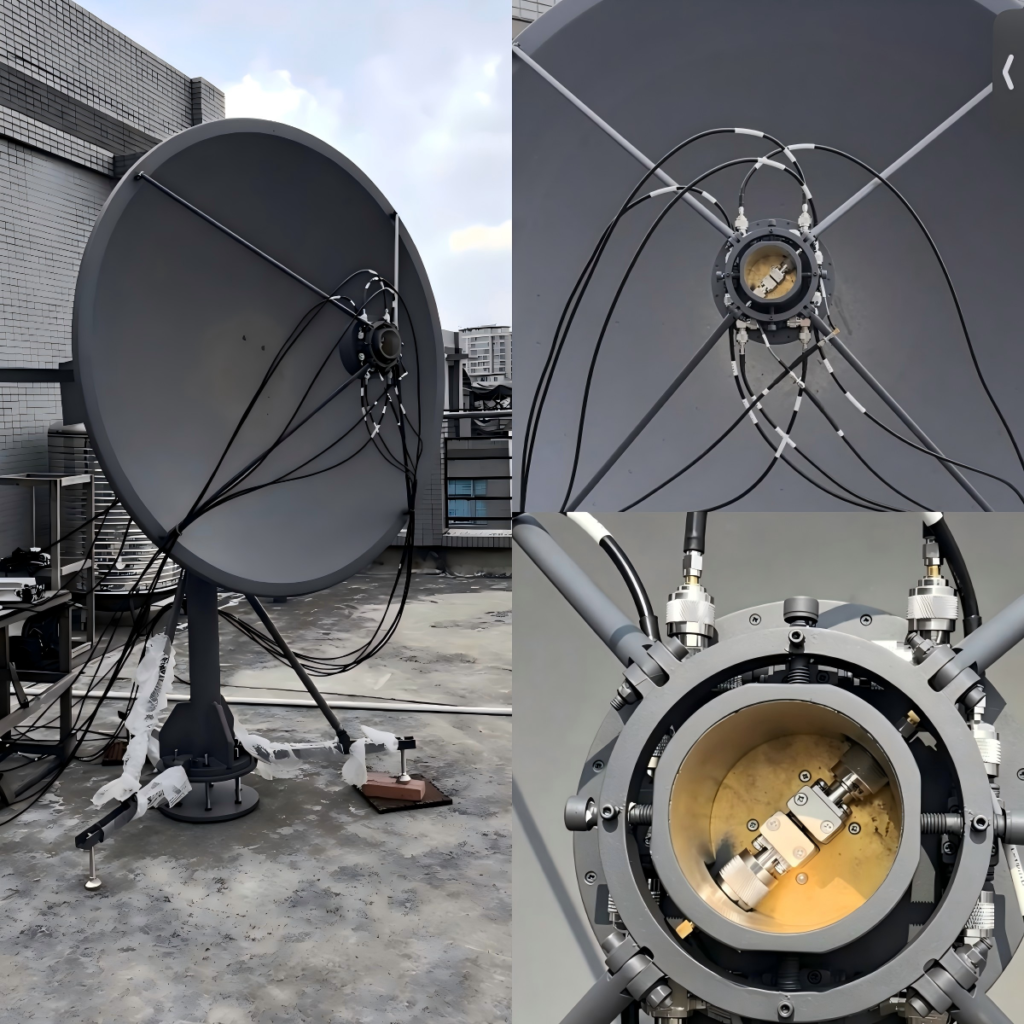
polarimetric radar dual-polarized horn antenna feed design
Anti-Jamming by Polarization: Filtering Out Deception Signals
This kind of dual-polarization radar has inherent anti-jamming capability. In the field of electronic warfare today, jammers can simulate the reflection of radar waves from targets, thereby creating false radar detection targets. We call this technique deception jamming. But in general, the antenna of a jammer is single-polarized. Even if the radar’s electromagnetic waves are dual-polarized, the deception jamming signal generated by the jammer has only a single vibration direction, making it clearly different from the dual-polarized radar waves reflected by a real target.
Just as we wear polarized sunglasses to filter out road reflections, the polarization difference of electromagnetic waves allows us to design a polarimetric filter that filters out single-polarized radar interference and clutter, clearly seeing the dual-polarized target.
Polarimetric Radar Target Recognition: From Raindrops to Snowflakes
Beyond that, polarimetric radar has even stronger target recognition capabilities. For example, an ordinary radar cannot distinguish between raindrops and snowflakes, but a polarimetric radar can. Raindrops, when falling, are flattened into oblate spheroids by air resistance – they reflect horizontal polarization more strongly. Snowflakes, on the other hand, have more random and rougher shapes, and the difference between horizontal and vertical polarization is less regular. By comparing the strength of horizontal and vertical echoes, a polarimetric radar can distinguish rain from snow.
Polarimetric Signatures: Shape, Structure, and Material Identification
Through polarimetric signatures, the radar can also infer the target’s shape, structure, surface roughness, and dielectric properties – this is especially useful in Earth observation radar imaging. Polarization is not only the radar’s art of cloning itself, but also a new sensing dimension that radar has opened up. Now you understand, right?
Explore our dual-polarized horn antennas and precision waveguide components to build your next-generation polarimetric radar system.