There is one type of phased‑array radar whose design difficulty is absolutely hell‑level: the all‑digital phased‑array radar. A conventional phased array relies on analog devices called phase shifters to control the time delay of each element’s transmit and receive signal, thus steering the beam. But the all‑digital phased array is different. Its core logic is to digitize every element’s signal as early as possible, then perform delay calibration, beamforming, target detection, and anti‑jamming entirely in the digital domain.
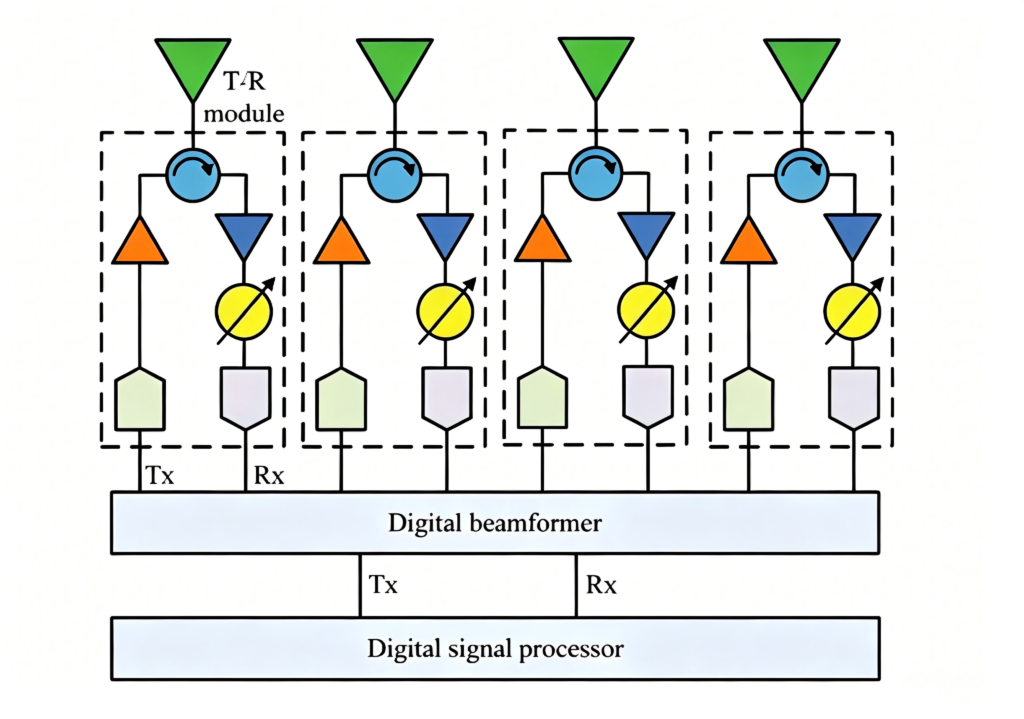
The benefits are extremely attractive: many simultaneous beams, software‑defined waveforms, better target detection, and stronger anti‑jamming.
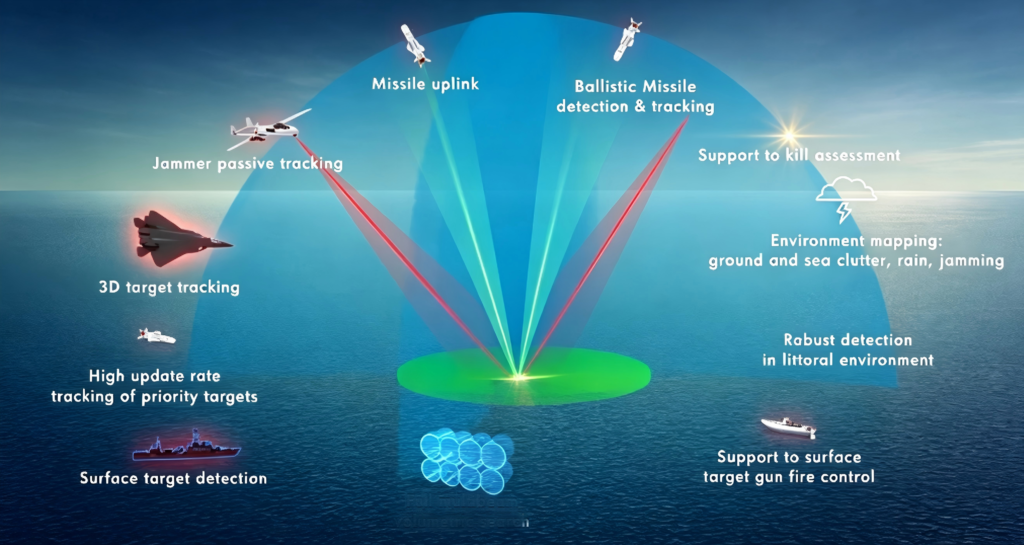
But the price is equally huge — the amount of data to be transferred and processed is enormous.
The Data Deluge: 16 GB/s from Just Eight Channels
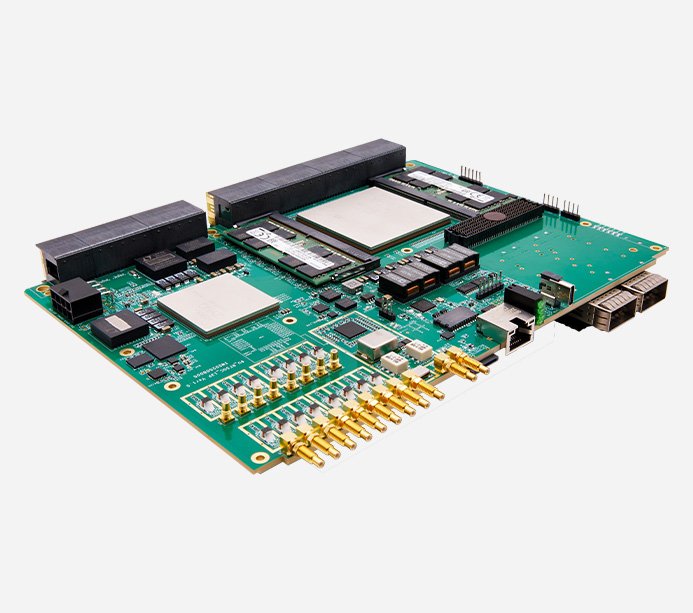
Advanced all‑digital phased arrays can reach instantaneous signal bandwidths of several hundred megahertz. Take this RFSoC chip I have here as an example. It’s used for quantization and acquisition of element signals. It can simultaneously acquire eight channels. After on‑chip digital down‑conversion (DDC), each channel yields an I/Q baseband signal with 400 MHz instantaneous bandwidth. That translates to about 2 GB per second per channel — so eight channels produce 16 GB per second, equivalent to streaming eight HD movies every second.
The Aggregation Beast: 100 GB/s Data Ingestion
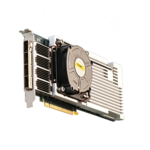
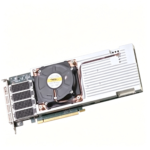
For all‑digital phased‑array signal processing, there is a hard requirement: all the data must be aggregated to a single location to perform digital beamforming. That’s where this data‑processing card comes in. On the front, this PCIe card has four QSFP28 ports, each capable of 100 Gbps send and receive. Combined, that’s 400 Gbps, or 50 GB per second. The rear of the card has SlimSAS connectors for internal interconnects, also providing 400 Gbps aggregate bandwidth. Together, the two‑side interfaces can ingest up to 100 GB per second of data.
The Processing Heart: FPGA with 12,000 DSP Slices
All this data then floods into the processing heart of the card: a massive, ultra‑scale FPGA. FPGAs are known for their high‑speed I/O and abundant real‑time DSP slices. For instance, the FPGA on this processing card integrates over 12,000 on‑chip DSP units — enough to perform digital beamforming for all channels simultaneously. The computed results are then streamed via the PCIe golden finger to the host computer at 16 GB per second for further signal processing.
And just like that, the maddening signal‑transport and real‑time processing puzzle of the all‑digital phased‑array radar is solved by this hard‑core hardware combination.
Building or evaluating an all‑digital phased‑array system? Explore our precision RF components — from calibration kits and cable assemblies to high‑performance LNAs and waveguide interconnects — to keep your front‑end clean and your data accurate.