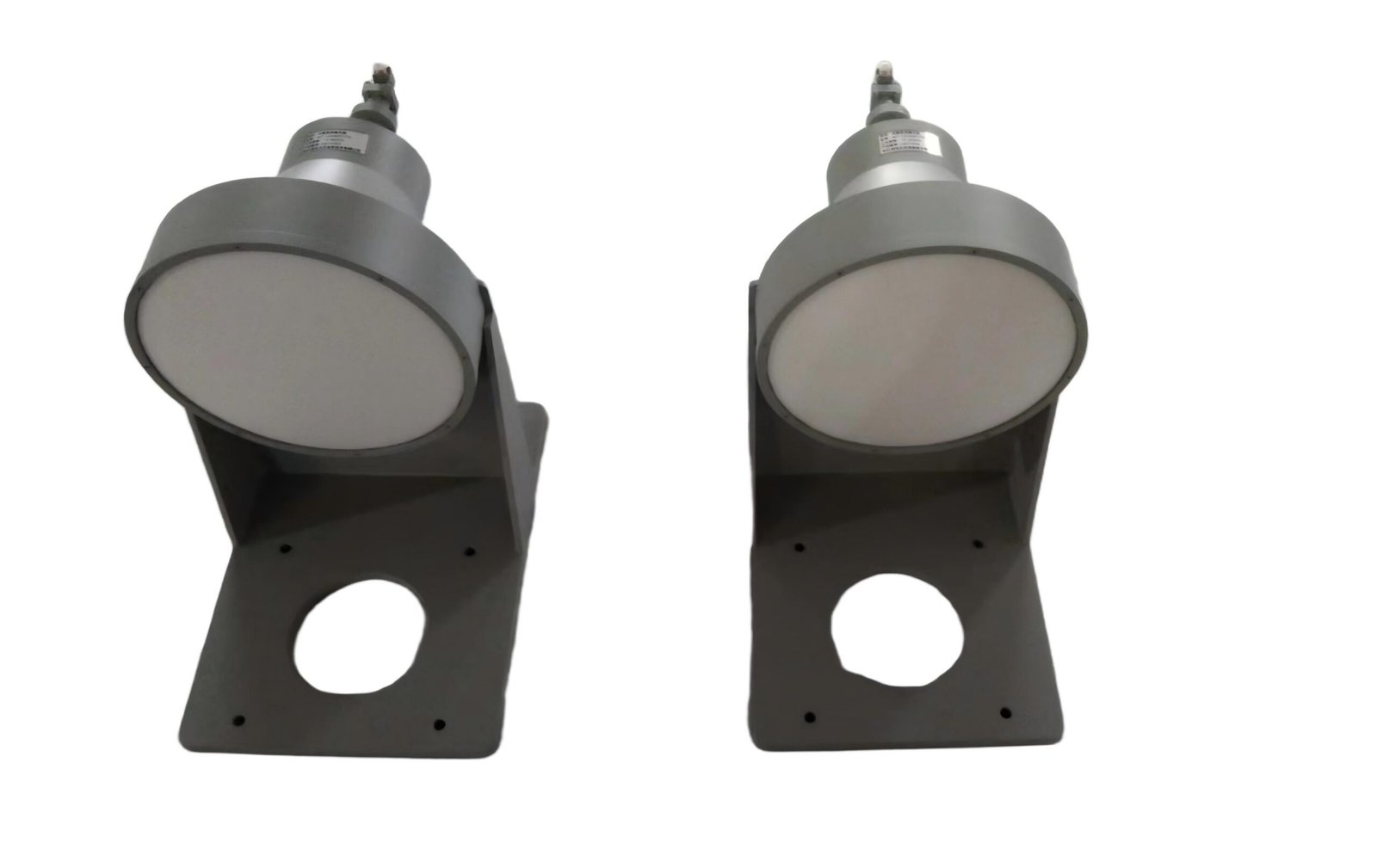
Circular (most common) or square configuration. It features highly symmetric E/H-plane patterns, a beamwidth of 30∘±5∘, and no beam splitting over the entire operating frequency band.
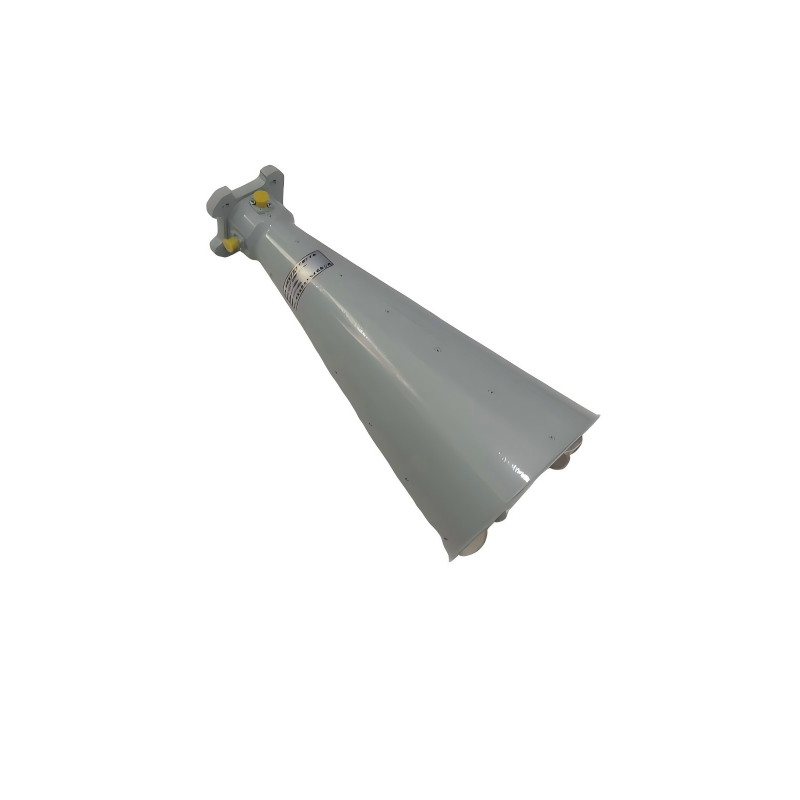
Quad-ridged design: Four orthogonal metal ridges are embedded on the inner wall of the horn (one for up, down, left and right), dividing the circular or square waveguide into four quadrants, which acts as the core structure for ultra-wideband and dual-polarization performance.
Dual polarization: Two pairs of orthogonal ridges are fed independently to excite two orthogonal fundamental modes, TE10 (horizontal) and TE01 (vertical). It realizes co-aperture radiation with port isolation of ≥30–40 dB.
Ultra-wideband performance: With exponential / Bessel tapered ridges and circular waveguide transition, it breaks the bandwidth limitation of conventional standard horns. The typical bandwidth ratio reaches 6:1~18:1 (e.g. 1–18 GHz), far exceeding 1.5:1~3:1 of ordinary dual-polarized standard horns.
Typical Structure (Rear to Front)
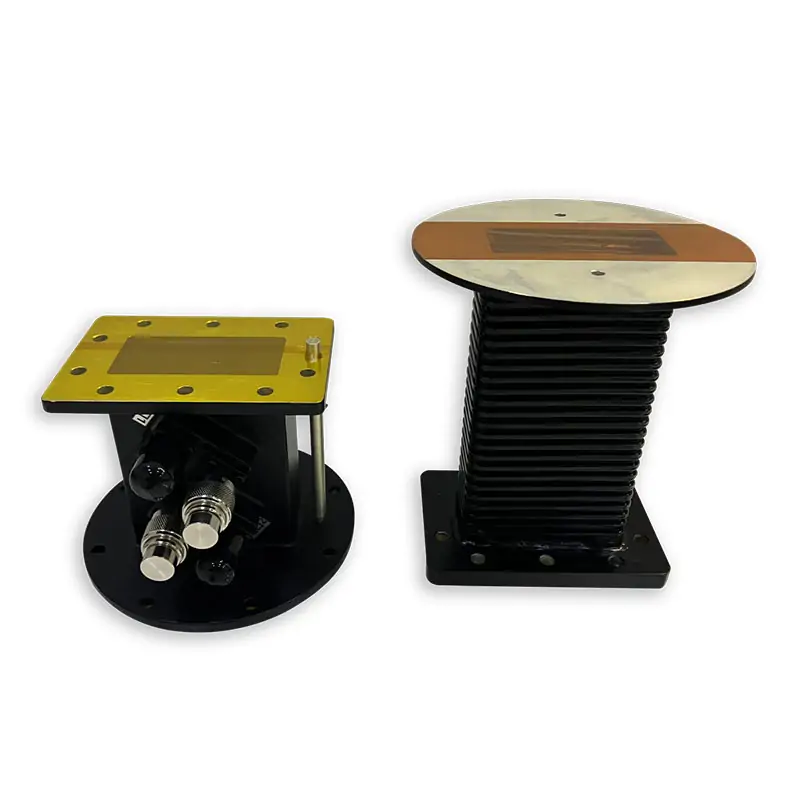
Dual feeding section: Equipped with orthogonal 50Ω SMA / 2.92mm connectors. A built-in cross-shaped OMT (Orthogonal Mode Transducer) guarantees high isolation between two channels and suppresses cross polarization.
Quad-ridged circular waveguide: Four orthogonally arranged metal ridges are integrated inside the circular waveguide to form two independent polarized channels, equivalent to a 360° integration of two orthogonal dual-ridged horns.
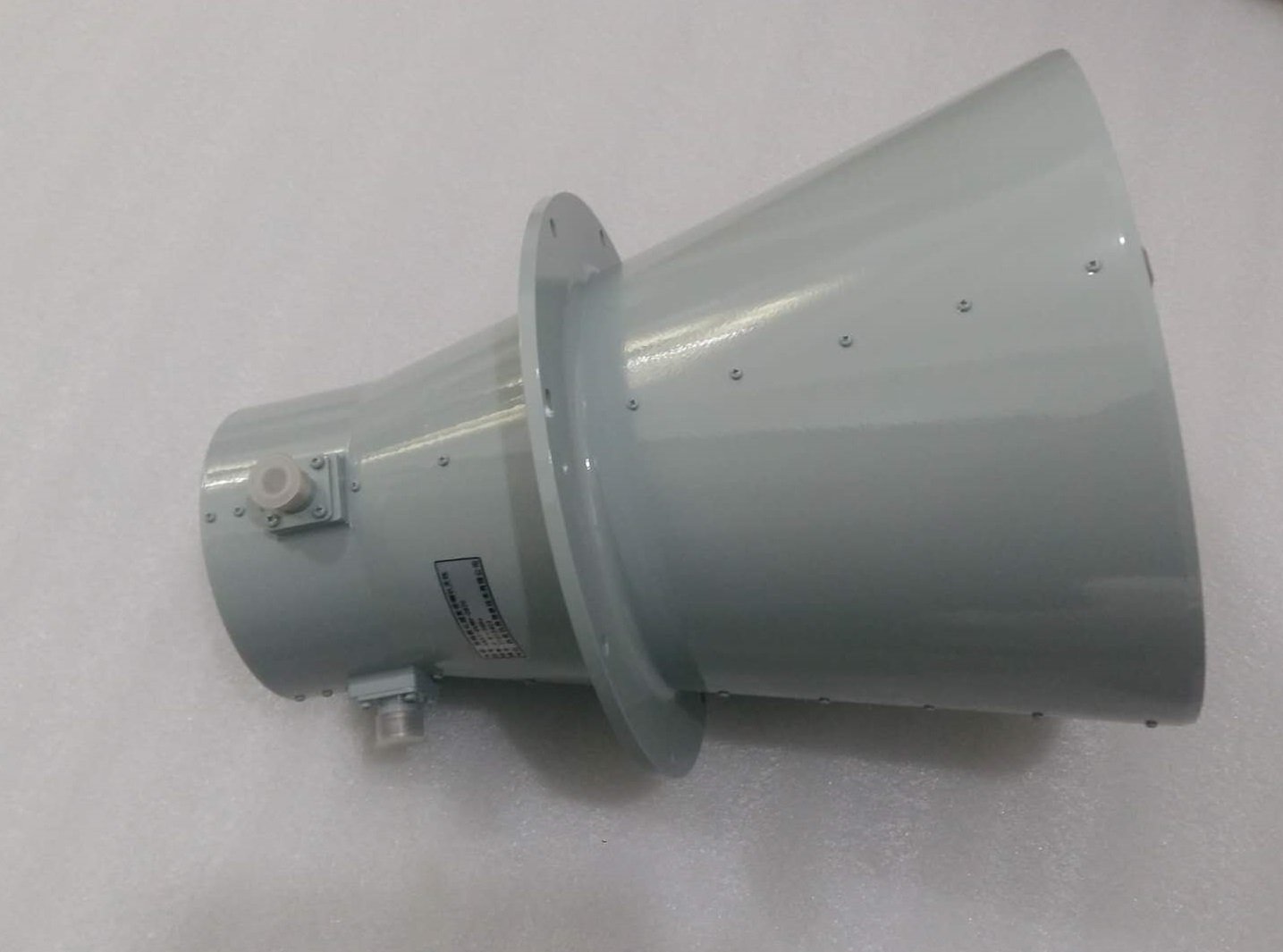
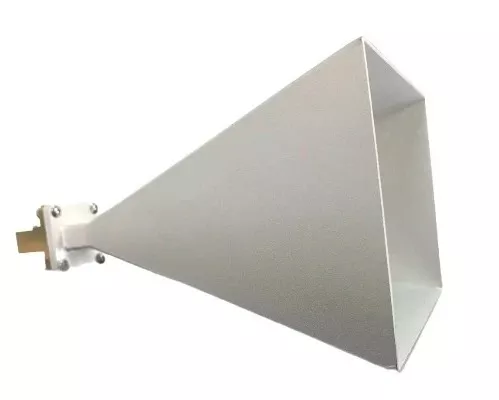
Tapered horn section: Adopts conical / square pyramidal composite linear taper. The ridges flare exponentially along the aperture, achieving full-band impedance matching and stable radiation patterns across 1–18 GHz.
Radiation aperture: Circular (most common) or square configuration. It features highly symmetric E/H-plane patterns, a beamwidth of 30∘±5∘, and no beam splitting over the entire operating frequency band.