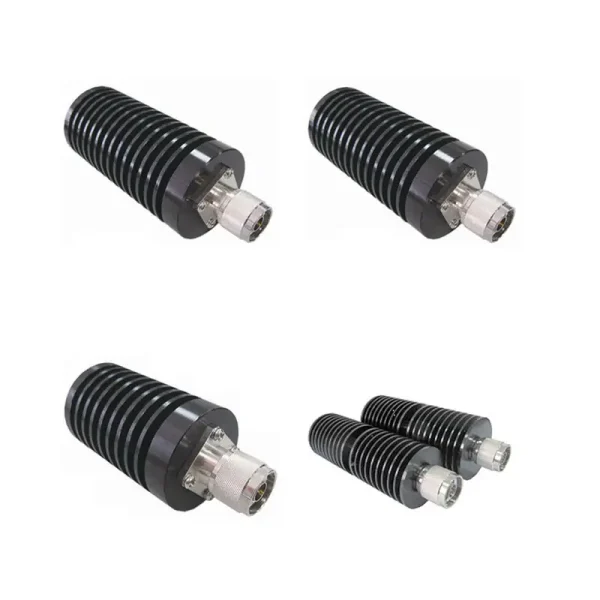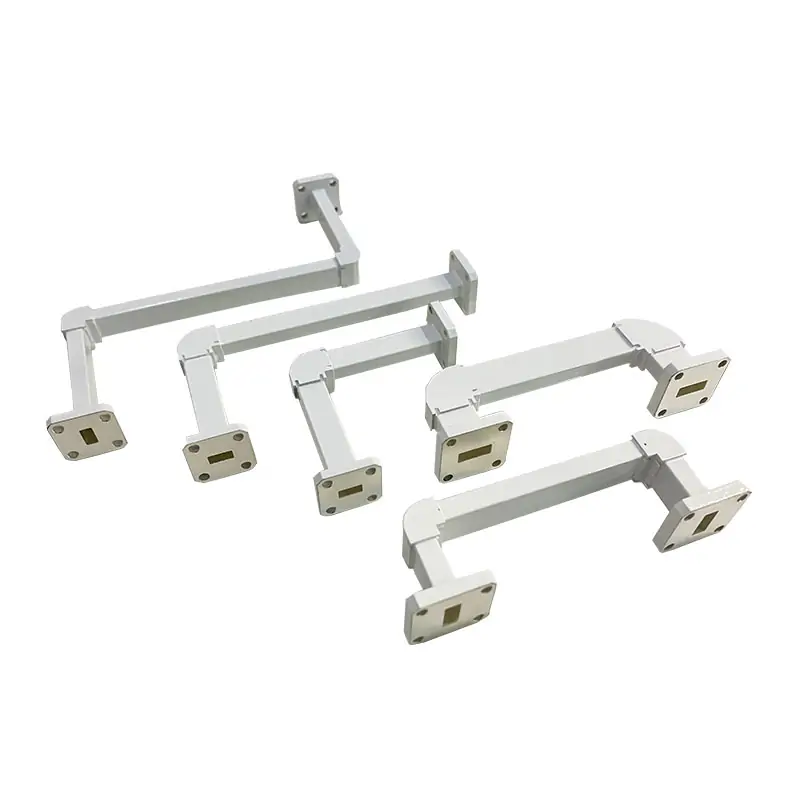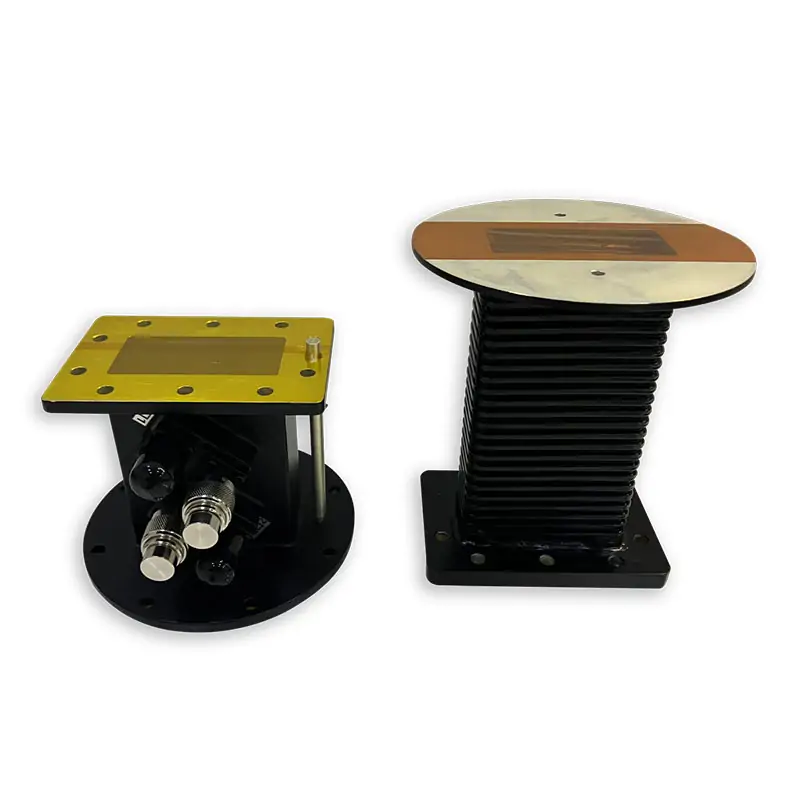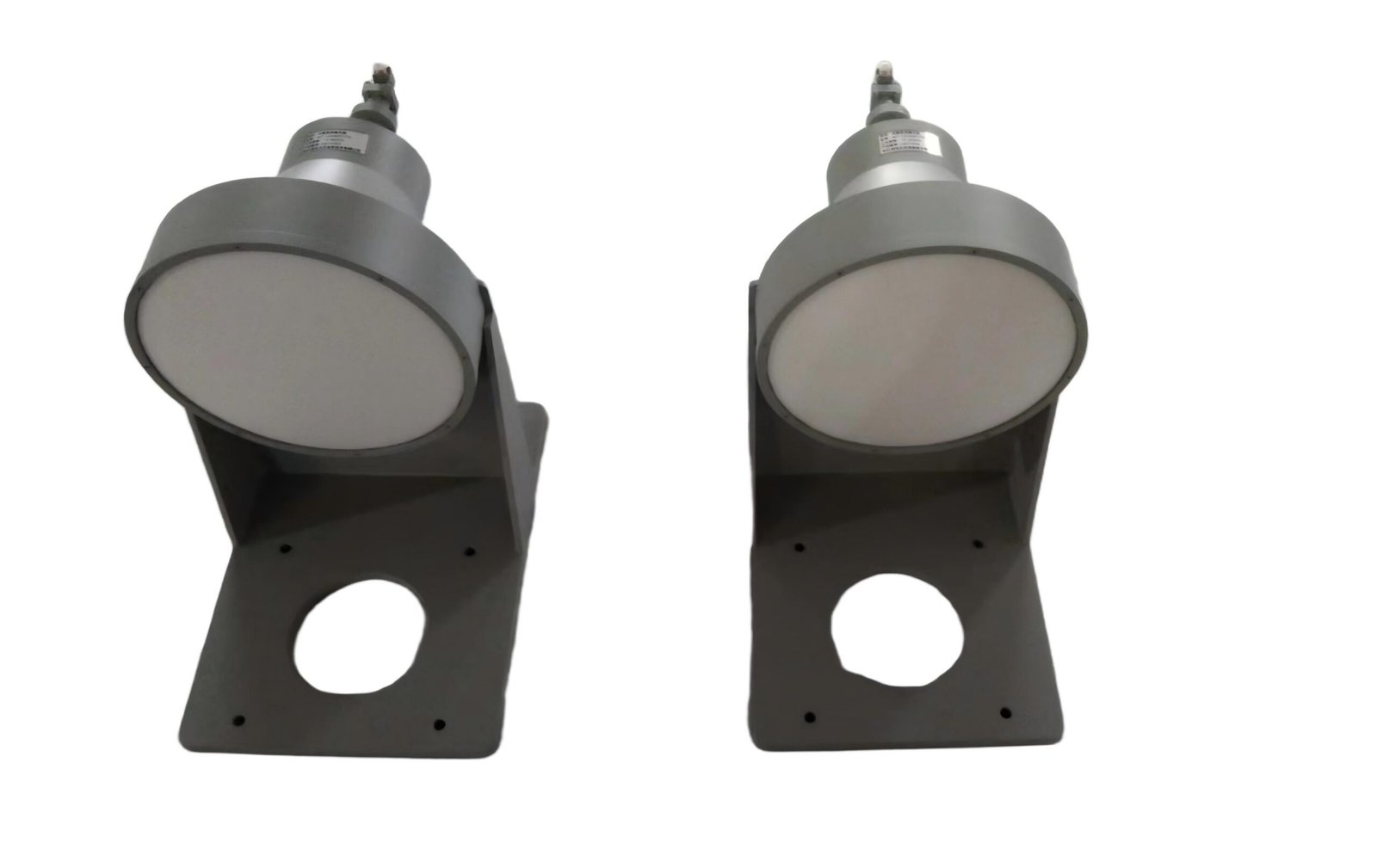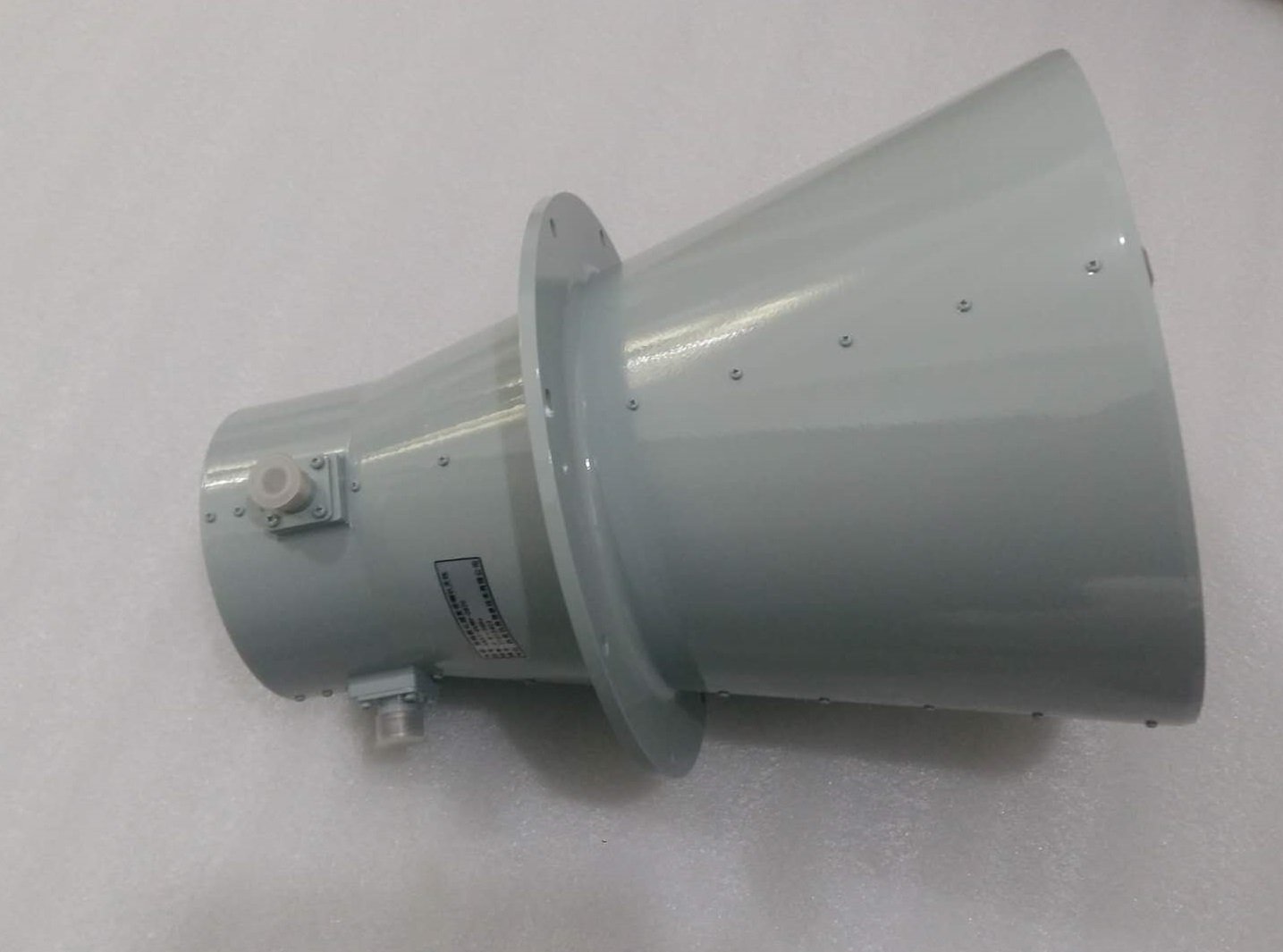
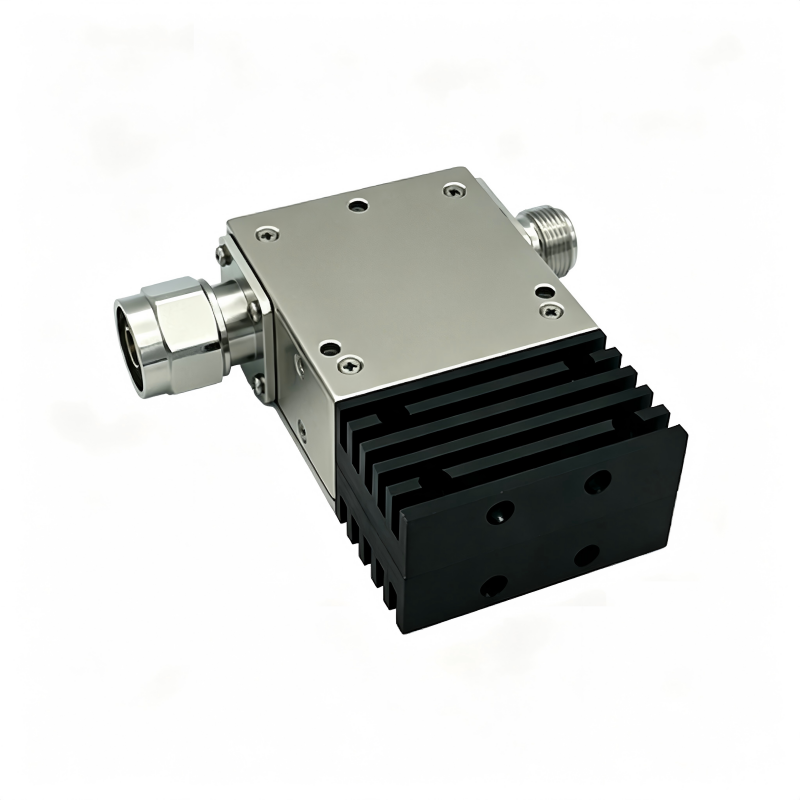
The high power isolator is a specialized high-power non-reciprocal device constructed with a reinforced coaxial cavity, large ferrite volumes, and an integrated high-power termination capable of dissipating significant reflected energy. It is purpose-built to ensure absolute protection and stable operation of high-power RF systems under the most stressful conditions.
Working Principle
The design begins with a robust coaxial Y-junction circulator. One port is connected to a high-power rated resistive load (often with its own heat sink). Forward power flows from the input (Port 1) to the antenna or load (Port 2) with minimal loss. Any reflected power entering Port 2 is routed directly to the high-power termination where it is safely converted to heat, rather than returning to the source. The magnetic circuit and ferrite geometry are scaled to handle high CW and peak power levels without degradation or thermal runaway.
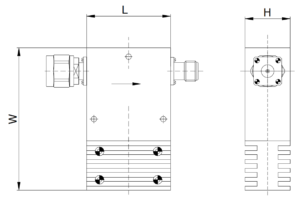
Key Features
Extreme Power Ratings: CW power handling from 50 W to over 1 kW, with peak powers several kilowatts, custom designs available.
Superior Thermal Design: Integrated large-area heat sinks, forced-air cooling options, and high-temperature ferrites ensure safe operation under full load.
High Isolation Under Load: Maintains >20 dB isolation even at maximum rated power, protecting expensive power amplifiers.
Low Forward Insertion Loss: Optimized to minimize power waste and heat generation in the transmission path.
Robust Connectivity: Equipped with high-power interfaces such as N (large), 7/16 DIN, or SC connectors for secure, low-loss connections.
Industrial-Grade Reliability: Designed to withstand vibration, shock, and continuous operation in broadcast, radar, and scientific installations.
Specifications