6.双脊弯波导

Dual Ridge Waveguide E/H Bend

Radial Double Ridge Bend: Features a smooth curved profile with excellent performance but larger dimensions.

Miter Double Ridge Bend: Uses an angled miter surface for reflection-based turning, offering a compact footprint, low cost, and easy fabrication, but with slightly higher VSWR.
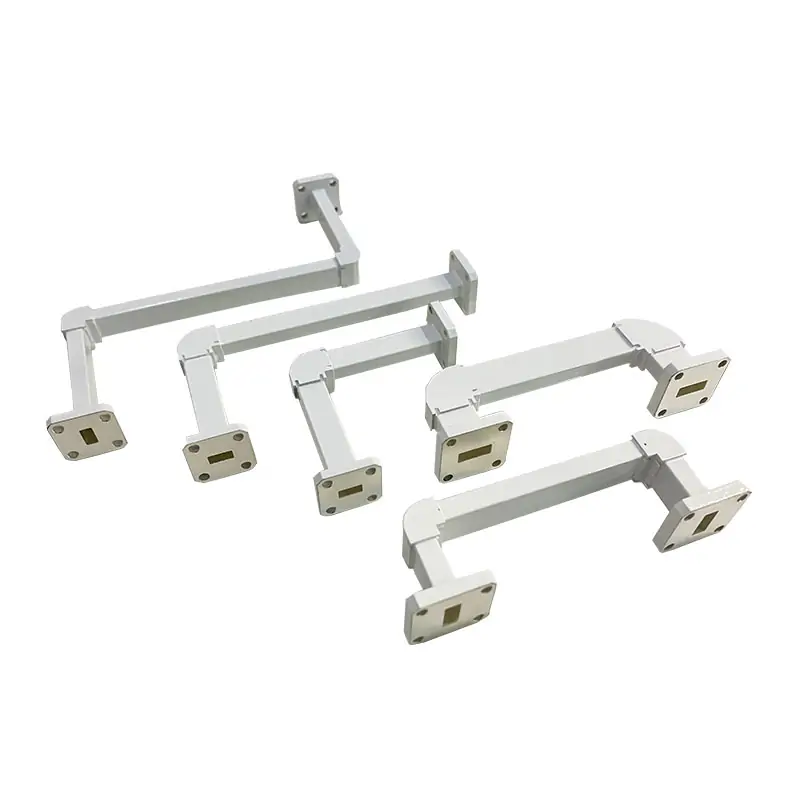
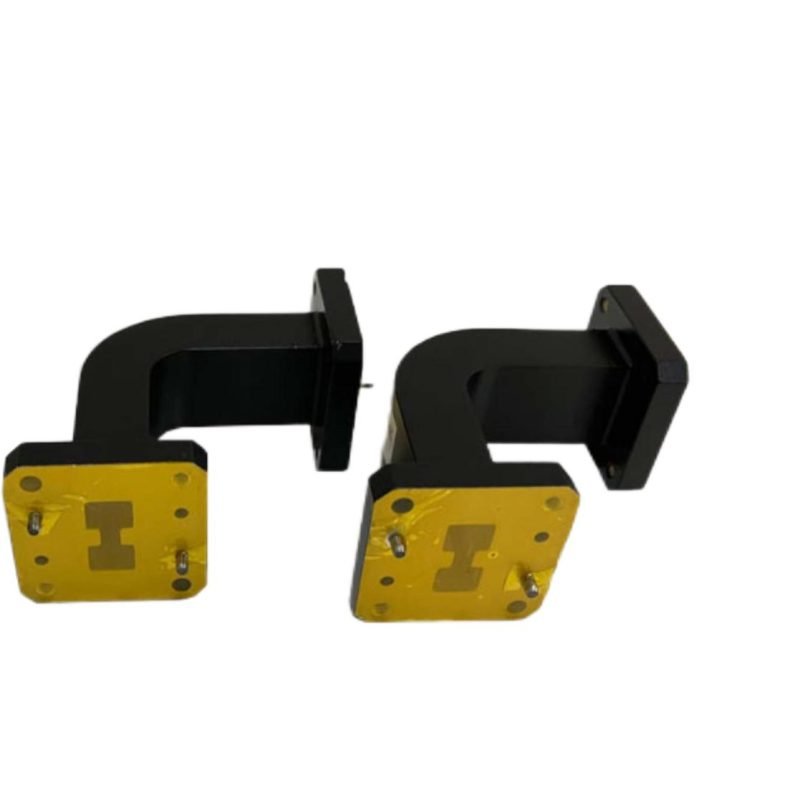
The Double Ridge Bend Waveguide is a waveguide elbow specifically designed for ultra-wideband systems. Its core function is to redirect signals while retaining the ultra-wide bandwidth, low impedance, and compact size advantages of the double-ridge structure.

Classification

  1. H-plane Double Ridge Bend
  2. E-plane Double Ridge Bend
  3. By Structure Type
    • Radial Double Ridge Bend: Features a smooth curved profile with excellent performance but larger dimensions.
    • Miter Double Ridge Bend: Uses an angled miter surface for reflection-based turning, offering a compact footprint, low cost, and easy fabrication, but with slightly higher VSWR.
Structure & Key Parameters

  • Double Ridge Structure: Symmetric metal ridges on the top and bottom broad walls, designed to extend the frequency bandwidth and reduce impedance (typically to 50Ω).
  • Bending Radius: Minimum radius for H-plane bends ≥ 1.5~2 × waveguide broad dimension a.
  • Standard Angles: 90° (most common), 45°, and 180° U-bends.
  • Interfaces: Double-ridge flanges (WRD series, e.g., WRD-650, WRD-500).
    The Double Ridge Bend Waveguide is a waveguide elbow specifically designed for ultra-wideband systems. Its core function is to redirect signals while retaining the ultra-wide bandwidth, low impedance, and compact size advantages of the double-ridge structure.

E Bend Specifications


H Bend Specifications

Home
Products
News
Contact Us
Search