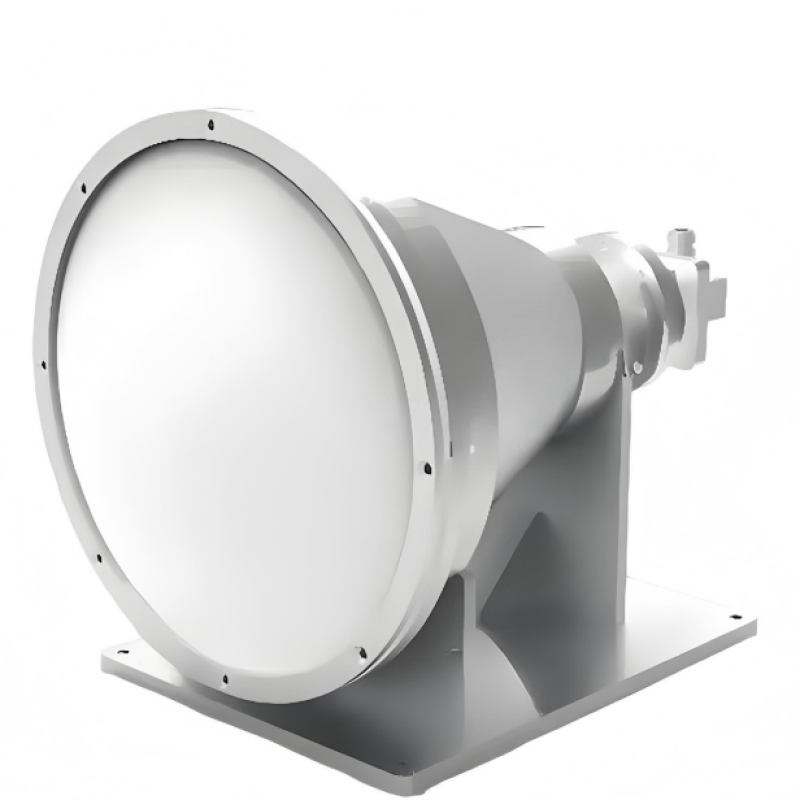
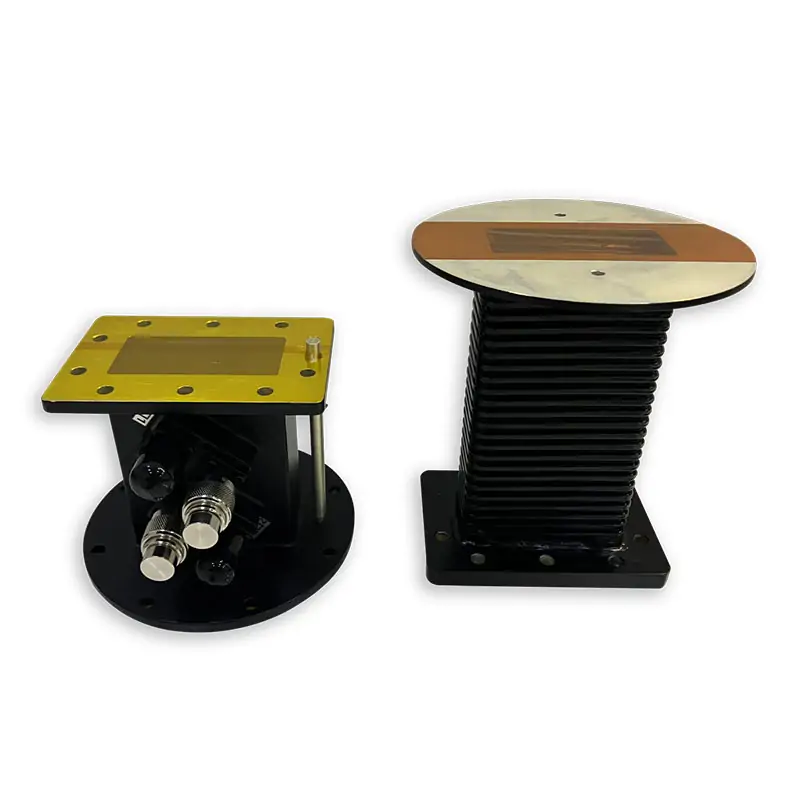
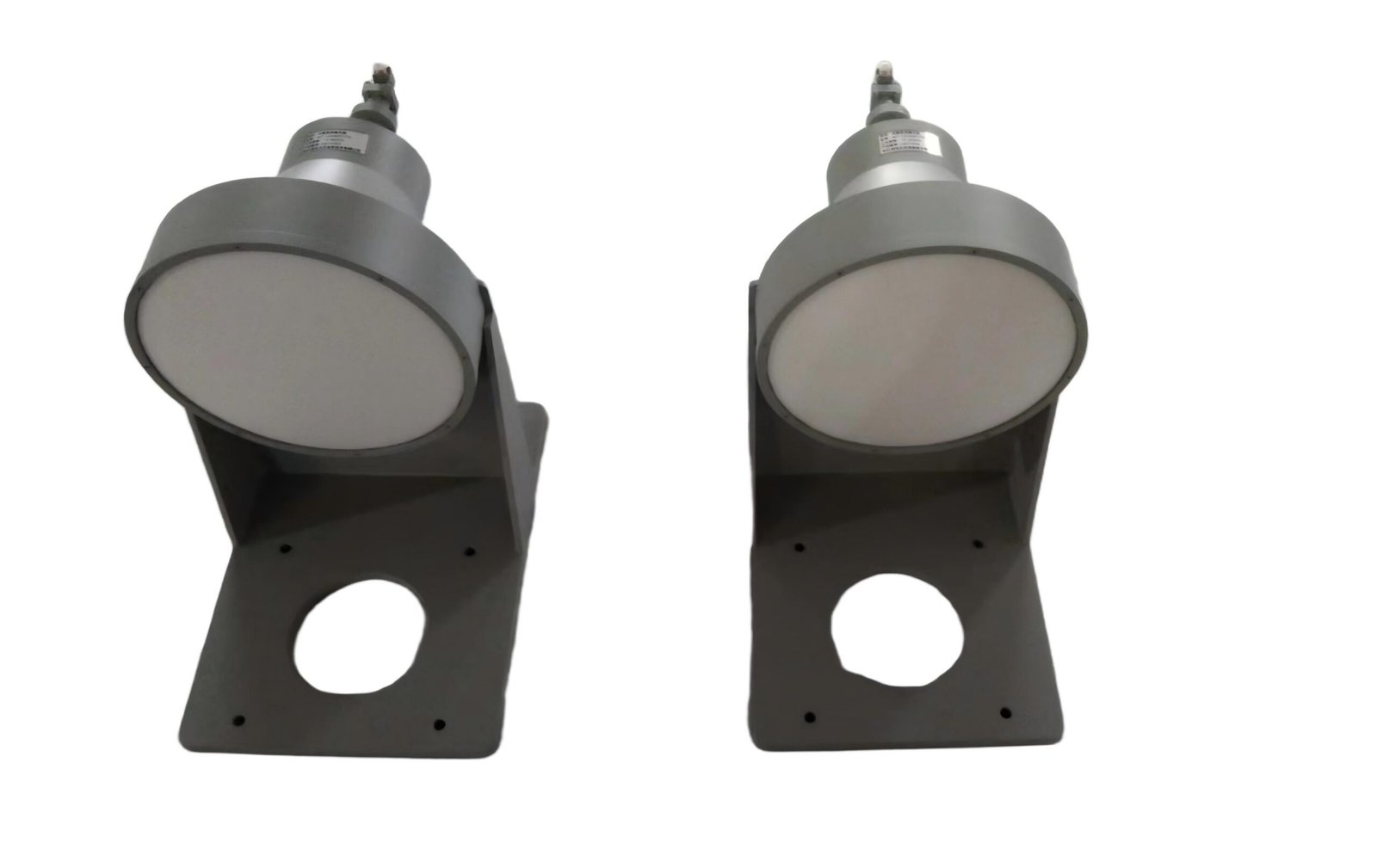
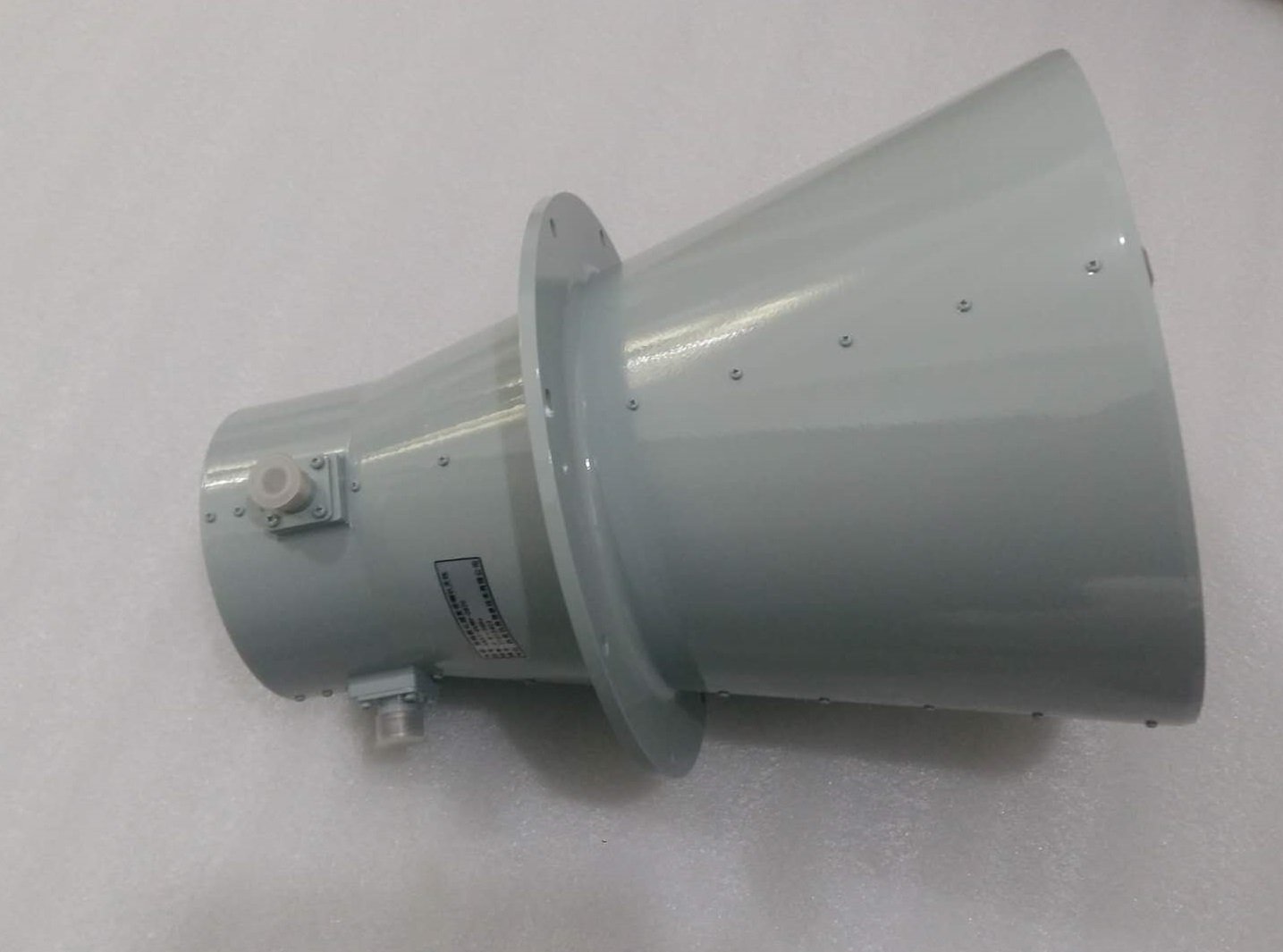
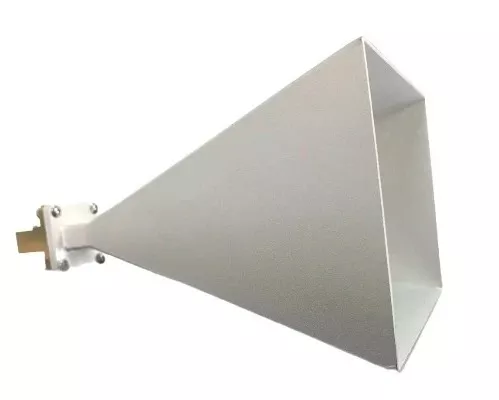
A Point Focusing Horn Lens Antenna (FLHA) is a microwave and millimeter-wave antenna equipped with a dielectric convex lens at the aperture of a conical horn. It concentrates the radiation beam onto a precise focal point in space, featuring a tiny focal spot, high energy density and controllable focal length.
Basic Structure
It mainly consists of two core parts:
- Feed Source: Typically a conical horn or corrugated horn, which radiates axisymmetric spherical waves with low sidelobes. Its phase center is precisely aligned with the object focal point of the lens.
- Dielectric Lens: Mostly designed as biconvex or plano-convex shape. Manufactured from low-loss, low-permittivity materials such as PTFE, HDPE and PEI with a relative permittivity of εr≈2∼3, to reduce reflection and transmission loss.
- Mounting Structure: The lens is fixed on the horn aperture. The spacing and focal length are strictly matched with design parameters to realize accurate beam focusing.
Working Principle
Identical to the light-concentrating theory of optical convex lenses, it relies on geometric optical refraction and phase correction:
- The horn radiates spherical waves and illuminates the lens surface;
- Electromagnetic wave phase velocity decreases inside dielectric materials (εr>1). The lens is thick at the center and thin at the edge, bringing greater phase delay to central electromagnetic waves;
- With customized curved surface design, divergent spherical waves emitted by the horn are converted into convergent spherical waves targeting the designated spatial focus, forming a compact focal spot with extremely high energy density.
Key Difference
General lens antennas realize the conversion from spherical waves to plane waves for long-distance high-gain radiation;
By contrast, point focusing lens antennas convert spherical waves into convergent spherical waves, aiming at short-range energy focusing.