4.H弯波导

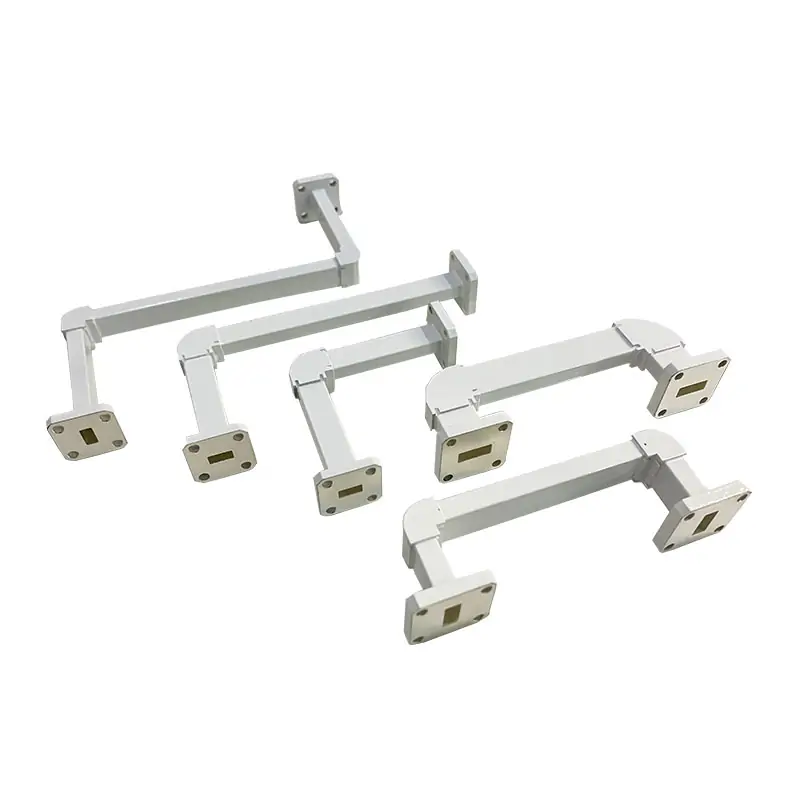
Waveguide E/H Bend

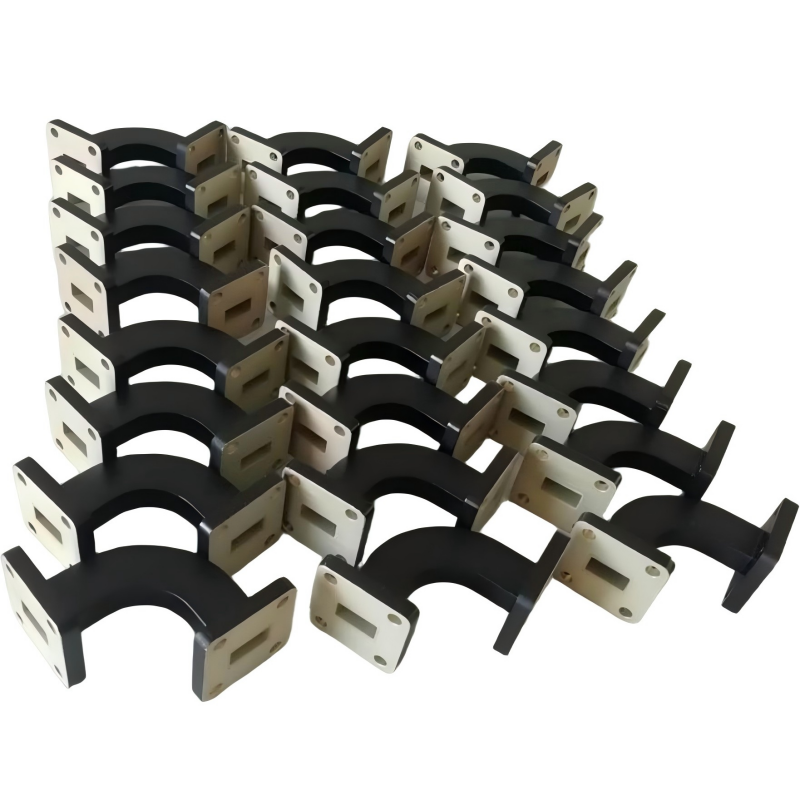
The standard bending angle is 90°, and other angles like 30°, 45°, 60°, etc., can be customized according to customer requirements.

Smooth/Radial Bend Waveguide serves as a core component for achieving smooth, low-reflection, and high-power turning in microwave/mmWave systems. Compared to chamfered bends, it features the most natural field transition, minimal standing wave, and highest power capacity.

Classification

According to the bending surface, arc bend waveguides can be divided into E-plane bend waveguides and H-plane bend waveguides.
  • An E-plane bend waveguide is formed by bending the wide side of a rectangular waveguide while the narrow side remains a flat plane;
  • An H-plane bend waveguide is formed by bending the narrow side while the wide side is a flat plane.
Based on the bending shape, the arc bend waveguide belongs to a type of arc bend, as opposed to chamfered bend waveguides and other types.

Features

The arc bend waveguide boasts features such as low VSWR, low insertion loss, and high power capacity, making it an indispensable structural unit in planar optical waveguide devices.

The larger the bending radius, the better the performance of the arc bend waveguide typically is, such as low standing wave ratio and wide frequency bandwidth.

Parameters

  • Bending Angle: The standard bending angle is 90°, and other angles like 30°, 45°, 60°, etc., can be customized according to customer requirements.
  • Material: The basic materials are copper and aluminum. Surface treatments include silver plating, gold plating, nickel plating, passivation, conductive oxidation, etc.
  • Frequency Range: The product covers a wide frequency range, such as 26.5GHz ~ 750GHz, and the specific range depends on the waveguide model.


E Bend Specifications


H Bend Specifications

Home
Products
News
Contact Us
Search